
The Feedback Gap isn’t a Joke

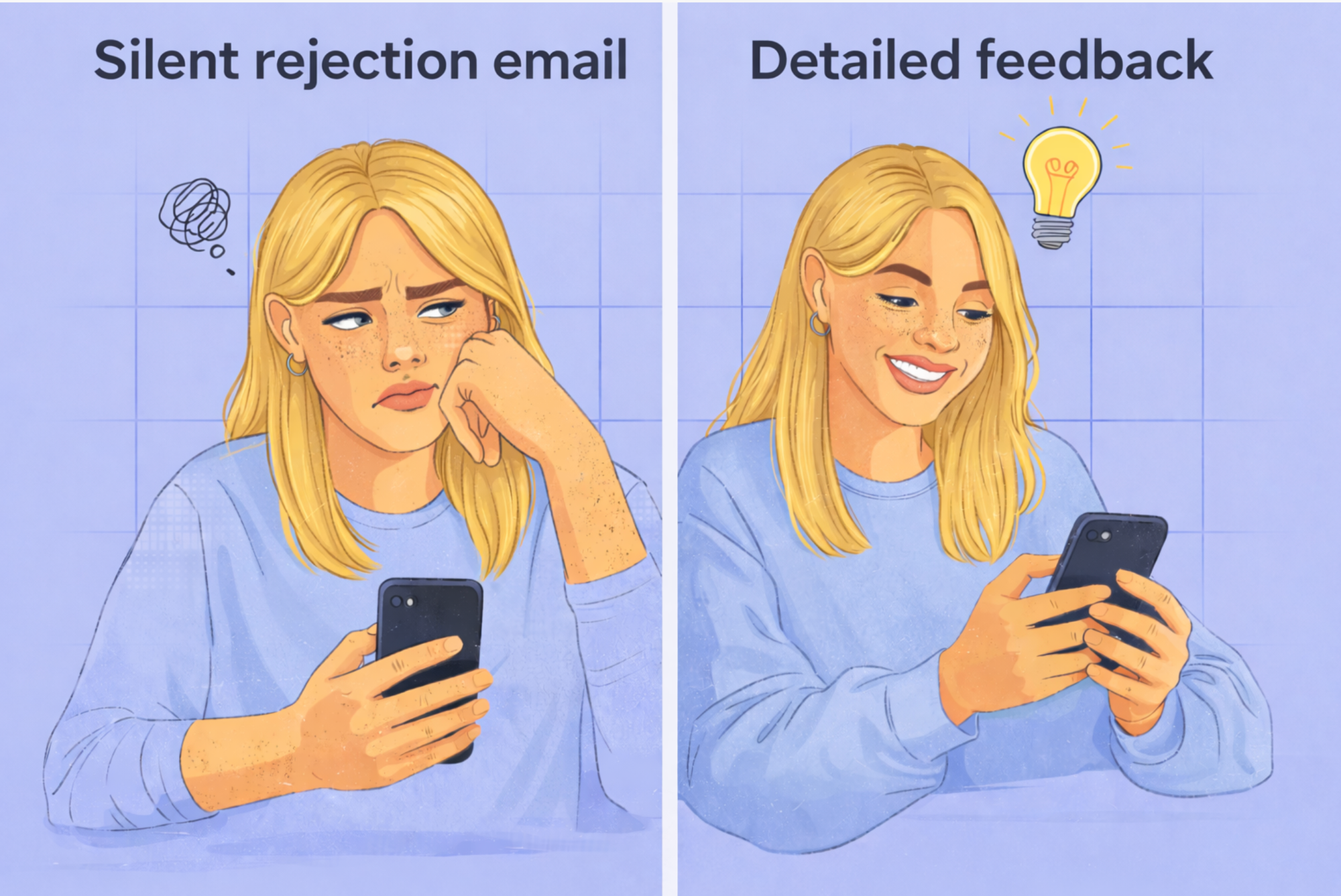
You just spent three hours interviewing a promising senior developer. They didn't get the role, but they nailed the system design portion and asked brilliant questions about your architecture. What happens next?
If you're like most technical teams, you send a generic rejection email and move on. But here's what you're missing: that candidate will remember how you treated them far longer than you'll remember their interview.
The Hidden Cost of Radio Silence
Most technical interviewers avoid giving feedback because it feels time-consuming and legally risky. But this silence creates a ripple effect that damages your hiring pipeline in ways you might not realize.
When candidates receive thoughtful feedback, they don't just walk away better prepared—they become advocates for your company. They tell other developers about your respectful process. They reapply when they've grown. They refer talented friends who trust your judgment.
The data backs this up: companies known for providing quality interview feedback consistently attract higher-caliber candidates and build stronger employer brands in competitive tech markets.
The Technical Leader's Advantage
As a technical interviewer, you're uniquely positioned to give feedback that actually matters. Unlike HR generalists, you understand the nuances of what makes a strong engineer. You know the difference between someone who lacks React experience and someone who struggles with fundamental programming concepts.
Your feedback can be surgical:
- "Your algorithm was correct, but consider the memory implications at scale"
- "Strong debugging skills, but practice articulating your thought process aloud"
- "Solid technical foundation—focus on system design patterns for senior roles"
This specificity transforms rejection into professional development.
The 5-Minute Framework
Effective feedback doesn't require hour-long phone calls. A well-crafted email taking five minutes can deliver tremendous value:
Start with genuine positives from their performance. Address specific technical gaps with actionable suggestions. End by acknowledging their effort and time investment.
The key is being deliberately constructive rather than accidentally vague. "Not a cultural fit" tells them nothing. "Strong technical skills, but your communication style felt too abstract for our customer-facing role" gives them something to work with.
The Compound Effect
Here's the thing about feedback: it compounds. Every thoughtful response you send builds your reputation as a leader who cares about the craft and the people in it. In a tight talent market, that reputation becomes a competitive advantage.
Question for reflection: When was the last time you received interview feedback that genuinely helped you grow? How did it change your perception of that company?
Insights from Top interview feedback examples and best practices, Tali Sachs.